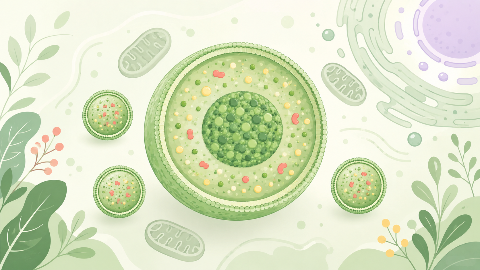
Biologie cellulaire
Les péroxysomes
Découvrez les peroxysomes, des petits organelles cellulaires clés pour la survie et l'adaptation de nos cellules ! À travers ce cours de biologie cellulaire, vous ex...
Osteology
Discover the central skeletal system of vertebrates: the vertebrae. In this osteology course, we will explore the morphology and function of each segment of this bone chain, essential for locomotion, protection of the spinal canal, and postural maintenance. Discover how these varied structures enable a wide variety of forms and lifestyles in vertebrates.

The vertebral column, or spinal column, is a complex and integral part of the skeletal system in the human body. This article aims to provide a comprehensive and detailed overview of the vertebrae, their classification, morphology, articulation, development, and clinical significance.
The vertebral column consists of 33 individual vertebrae that can be classified into four groups based on their structure and function: cervical, thoracic, lumbar, and sacral/coccygeal vertebrae.
Cervical Vertebrae (C1-C7)
Thoracic Vertebrae (T1-T12)
Lumbar Vertebrae (L1-L5)
Sacral (S1-S5) and Coccygeal Vertebrae (Co1-Co4)
Each individual vertebra shares several common features:
Cervical Vertebrae
Thoracic Vertebrae
Lumbar Vertebrae
Sacral and Coccygeal Vertebrae
The articulation between adjacent vertebrae occurs at the inferior and superior articular facets of each vertebra. This allows for flexion, extension, lateral bending, and rotation of the spine. The intervertebral discs, located between individual vertebrae, contribute to this mobility by absorbing compression forces and allowing limited motion.
The vertebrae develop from embryonic mesodermal tissue called somites, which give rise to the sclerotome, a specific group of cells that differentiate into bones. The sclerotome condenses and gives rise to the ossification centers for each individual vertebra, eventually forming mature bone through endochondral ossification.
The vertebral column is susceptible to various injuries, degenerative changes, and pathologies such as herniated discs, osteoarthritis, and fractures. Understanding the anatomy, morphology, and function of each individual vertebra can aid in the accurate diagnosis and treatment of these conditions.
The vertebral column plays a crucial role in providing structural support, protecting the spinal cord, and allowing mobility in the upper body. Understanding its anatomy, morphology, development, and clinical significance is essential for healthcare professionals involved in diagnosing and treating related conditions.
Do you think you know everything about this course? Don't fall into the traps, train with quizzes! eBiologie has hundreds of questions to help you master this subject.
Découvrez les peroxysomes, des petits organelles cellulaires clés pour la survie et l'adaptation de nos cellules ! À travers ce cours de biologie cellulaire, vous ex...
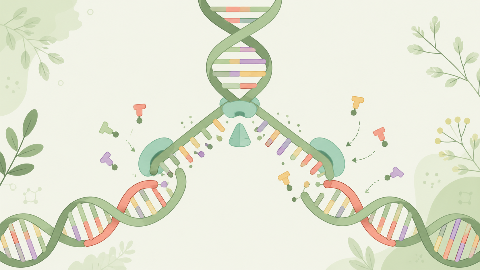
Découvrez comment notre ADN se reproduit à chaque cellule division dans ce cours de biochimie moléculaire : « Réplication du DN ». Vous apprendrez les étapes clés de...
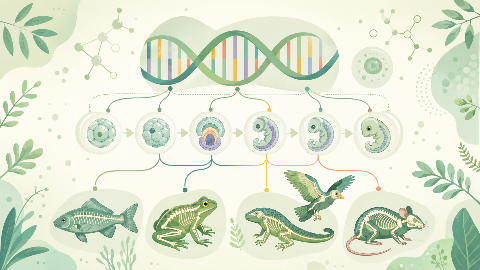
Découvrez la biologie du développement évolutif, le domaine qui étudie les mécanismes du développement embryonnaire et leur évolution au niveau moléculaire, cellulai...