Cellular Biology
The peroxisomes
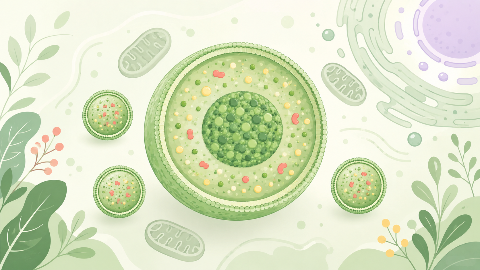
Discover peroxisomes, small cellular organelles that are key to the survival and adaptation of our cells! In this cell biology course, you'll explore their structure...
Biochemistry
Discover the key chemical bonds underlying the structure and function of biological molecules. This course explores covalent, ionic, hydrogen, and metallic bonds, their formation, properties, and role in the synthesis of macromolecules such as proteins and nucleotides.

The study of chemistry is fundamental to understanding the behavior and properties of matter, including living organisms. One crucial aspect of chemistry that plays a vital role in biology is the chemical bond, which refers to the attractive force between atoms or ions that holds them together to form molecules or crystals. This course aims to provide an in-depth exploration of various types of chemical bonds and their significance in biological systems.
Chemical bonds are the primary means by which atoms share or transfer electrons, leading to the formation of molecules with distinct properties compared to individual atoms. The strength and type of a chemical bond determine the stability, reactivity, and structure of a molecule, as well as its role within a biological context.
Covalent bonds are formed when two atoms share one or more pairs of electrons. These bonds are characterized by equal sharing of electrons between atoms, leading to stable molecules. The strength of covalent bonds depends on factors such as the electronegativity of the bonded atoms, the number of shared electron pairs, and the spatial arrangement of the atoms involved.
Covalent bonds play essential roles in various biological molecules, including:
Ionic bonds occur when an atom loses one or more electrons to form a cation (positive ion), while another atom gains these electrons to form an anion (negative ion). The resulting ions are attracted to each other due to opposite charges, forming a stable crystalline lattice.
Ionic bonds are less common in biological systems compared to covalent bonds but still play important roles:
Hydrogen bonds are weak intermolecular forces that arise when a hydrogen atom covalently bonded to an electronegative atom (such as oxygen, nitrogen, or fluorine) is partially attracted to another electronegative atom in close proximity. Hydrogen bonds contribute to the stability and organization of molecules and crystal structures.
Hydrogen bonds play crucial roles in various biological systems:
The chemical bond is a fundamental concept in chemistry that underlies the structure, function, and behavior of all matter, including living organisms. Understanding the various types of chemical bonds—covalent, ionic, and hydrogen—and their roles within biological systems enables us to appreciate the complex intricacies of life at the molecular level.
Penses-tu tout connaître de ce cours ? Ne tombe pas dans les pièges, entraine-toi à l'aide des QCM ! eBiologie recense des centaines de questions pour t'aider à maîtriser ce sujet.
Discover peroxisomes, small cellular organelles that are key to the survival and adaptation of our cells! In this cell biology course, you'll explore their structure...
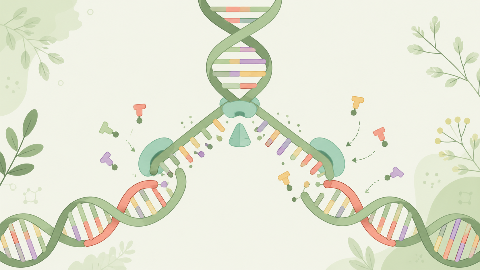
Discover how our DNA replicates with each cell division in this molecular biochemistry course: "DNA Replication." You'll learn the key steps in this crucial process...
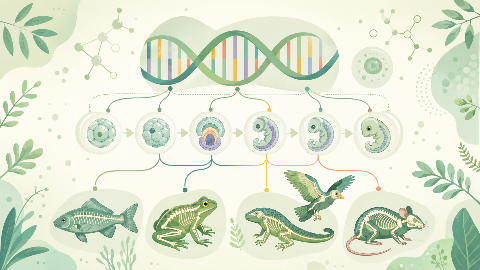
Learn about evolutionary developmental biology, the field that studies the mechanisms of embryonic development and their evolution at the molecular, cellular, and st...