Cellular Biology
The peroxisomes
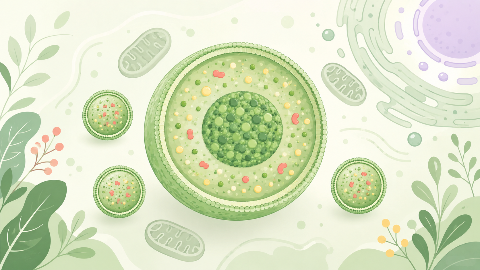
Discover peroxisomes, small cellular organelles that are key to the survival and adaptation of our cells! In this cell biology course, you'll explore their structure...
Neuroanatomy
An in-depth immersion into the anatomy of nervous systems and neuronal cell physiology. Discover the fundamental structures and mechanisms that govern the transmission of electrical signals between nerve cells, as well as the clinical consequences of dysregulation of these processes. Study the macroscopic, microscopic, and functional observation of different brain and neuronal areas in the context of human neuroanatomy.

The field of Neuroscience encompasses the study of the nervous system, a complex network that governs all aspects of behavior, sensation, and cognition. This course delves into two crucial subfields: Neuroanatomy and Cellular Neurophysiology. The former provides an understanding of the structural organization of the nervous system, while the latter elucidates the functional properties of individual neurons and their interactions.
Neuroanatomy offers insights into the spatial arrangement of the brain's various regions and their connections with each other, providing a basis for understanding how the brain functions as a whole.
The CNS primarily consists of the brain and spinal cord, which work in concert to process information from the environment and control bodily responses. The CNS can be further divided into two major parts: the forebrain, hindbrain, and midbrain (prosencephalon, rhombencephalon, and mesencephalon, respectively), and the spinal cord.
The forebrain is responsible for higher cognitive functions, such as learning, memory, and emotions. It can be further subdivided into the cerebrum, thalamus, hypothalamus, and diencephalon.
The cerebrum, the largest part of the human brain, is divided into two hemispheres (left and right) connected by a band of tissue called the corpus callosum. The cerebrum is involved in various cognitive functions, including sensory perception, motor control, language, and spatial reasoning.
The thalamus serves as a relay station for incoming sensory information before it's sent to other parts of the brain for processing. It's also crucial in regulating consciousness and sleep-wake cycles.
The hypothalamus, situated below the thalamus, plays a key role in regulating hormone secretion by the pituitary gland, controlling body temperature, hunger, and thirst, as well as some emotional responses.
The PNS consists of all nerves outside the CNS that transmit information between the central nervous system and the rest of the body. It can be further divided into two parts: the somatic nervous system (SNS), responsible for voluntary movements and sensations, and the autonomic nervous system (ANS), which regulates involuntary bodily functions such as heart rate and digestion.
Cellular neurophysiology focuses on the functional properties of individual neurons and their interactions. This section discusses various types of neurons, their electrical properties, and signaling mechanisms.
Neurons can be categorized based on their shape, electrical properties, and connections with other neurons. The three main types are sensory (afferent), motor (efferent), and interneurons.
Sensory neurons transmit information from the body's receptors to the CNS. They have dendrites that receive incoming signals, an axon that carries those signals towards the CNS, and a cell body located between the dendrites and axon.
Motor neurons transmit information from the CNS to effectors such as muscles or glands. They have an axon that carries signals away from the CNS, a cell body, and dendrites that receive incoming signals.
Interneurons are those neurons that connect other neurons within the CNS. They facilitate complex information processing within the brain.
Neurons have unique electrical properties that enable them to process and transmit information. Two essential concepts include action potentials (AP) and synaptic transmission.
An AP is a brief, rapid change in voltage across a neuron's membrane caused by the movement of ions. APs allow neurons to transmit electrical signals over long distances without losing their integrity.
Synaptic transmission occurs when an action potential in a presynaptic neuron triggers the release of neurotransmitters, which then bind to receptors on a postsynaptic neuron, causing a change in its electrical properties. This process enables communication between neurons and forms the basis for neural computation.
Neuronal communication relies on the release of neurotransmitters from one neuron (the presynaptic neuron) to bind with receptors on another neuron (the postsynaptic neuron). Understanding the various types of neurotransmitters, their mechanisms of action, and how they contribute to different brain functions is fundamental to grasping cellular neurophysiology.
Neurotransmitters can be classified into several categories based on their chemical structure and functional roles. Some examples include:
Neurotransmitters exert their effects by binding to specific receptors on the postsynaptic neuron's membrane, which in turn modulate ion channels or activate second messenger systems. Some common mechanisms include:
Penses-tu tout connaître de ce cours ? Ne tombe pas dans les pièges, entraine-toi à l'aide des QCM ! eBiologie recense des centaines de questions pour t'aider à maîtriser ce sujet.
Discover peroxisomes, small cellular organelles that are key to the survival and adaptation of our cells! In this cell biology course, you'll explore their structure...
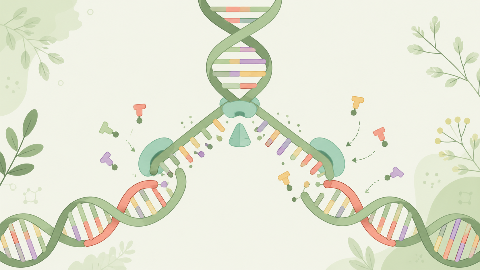
Discover how our DNA replicates with each cell division in this molecular biochemistry course: "DNA Replication." You'll learn the key steps in this crucial process...
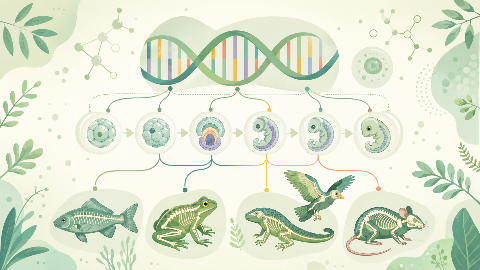
Learn about evolutionary developmental biology, the field that studies the mechanisms of embryonic development and their evolution at the molecular, cellular, and st...