Cellular Biology
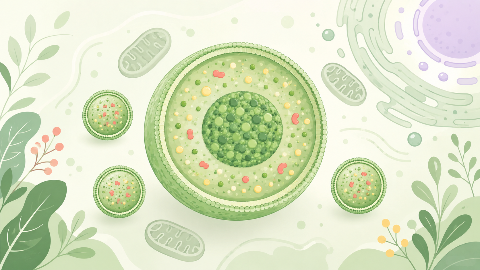
The peroxisomes
Discover peroxisomes, small cellular organelles that are key to the survival and adaptation of our cells! In this cell biology course, you'll explore their structure...
Anatomy
Discover the fundamentals of the human skeleton in our course "The Support System: The Skeleton." This course explores bones and their central role in the structure, stability, and function of the body. You'll learn to identify the main types of bones, understand how they grow and renew, and explore the joint systems that allow the skeleton to withstand mechanical forces while ensuring high mobility.
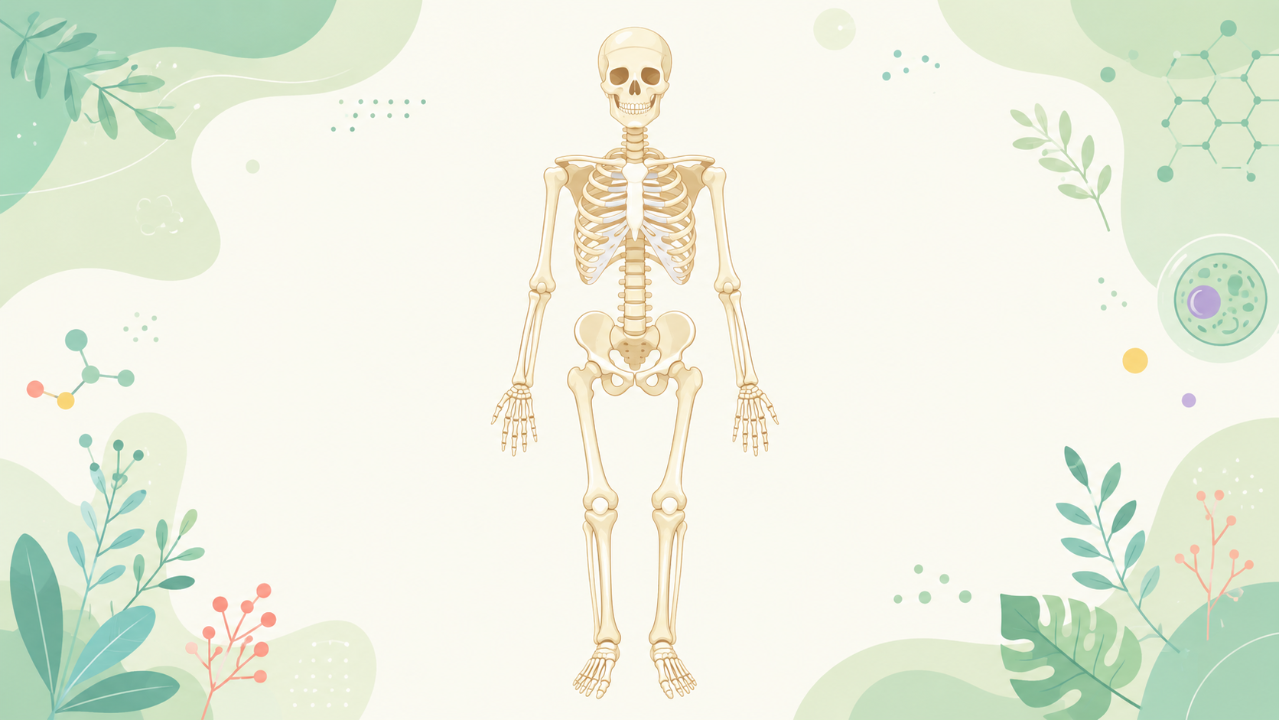
The skeletal system, also known as the endoskeleton or axial skeleton, is one of the most crucial support systems in the human body. It provides shape and protection to vital organs, enables movement through joints, and serves as an attachment site for muscles. This extensive network of bones, cartilages, ligaments, tendons, and joints forms a complex yet intricate system that is essential for maintaining homeostasis within the organism.
Bones are composed primarily of organic and inorganic materials. The organic component, which makes up about 30% of bone volume, consists mainly of collagen fibers that provide flexibility and strength. The inorganic component, or mineral salts (primarily hydroxyapatite), accounts for the remaining 70%.
Although bone growth largely ceases at puberty, adult bones still grow to some extent. This is accomplished by appositional and endosteal growth. Appositional growth adds bone tissue to the surface of existing bones, while endosteal growth occurs within the medullary cavity, where bone marrow resides.
The articulations or joints are sites of connection between two or more bones. They enable movement by allowing bones to move relative to one another. There are three main types of joints based on their mobility and structure:
The skeleton supports the body while also serving as an attachment site for muscles. When muscles contract, they pull on bones, causing them to move. This movement can be described in three ways: flexion (bending), extension (straightening), and rotation (twisting). In this way, the musculoskeletal system allows for complex movements and positions required for daily activities.
¿Crees que sabes todo sobre este curso? No caiga en trampas, practique el uso de preguntas frecuentes. eBiologie enumera cientos de preguntas para ayudarle a dominar este tema.
Discover peroxisomes, small cellular organelles that are key to the survival and adaptation of our cells! In this cell biology course, you'll explore their structure...
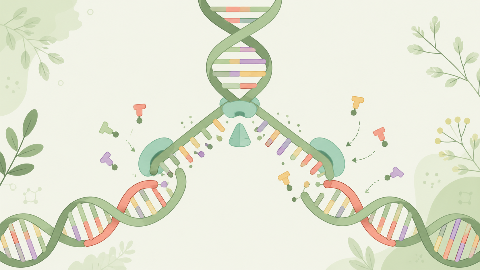
Discover how our DNA replicates with each cell division in this molecular biochemistry course: "DNA Replication." You'll learn the key steps in this crucial process...
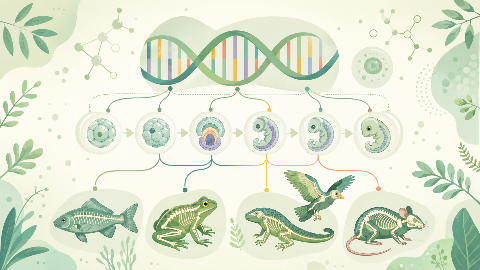
Learn about evolutionary developmental biology, the field that studies the mechanisms of embryonic development and their evolution at the molecular, cellular, and st...