Cellular Biology
course-show.h1-title
Discover the world of ribosomes in this cell biology course! You'll learn to understand their structure and their central role in protein synthesis.
Introduction
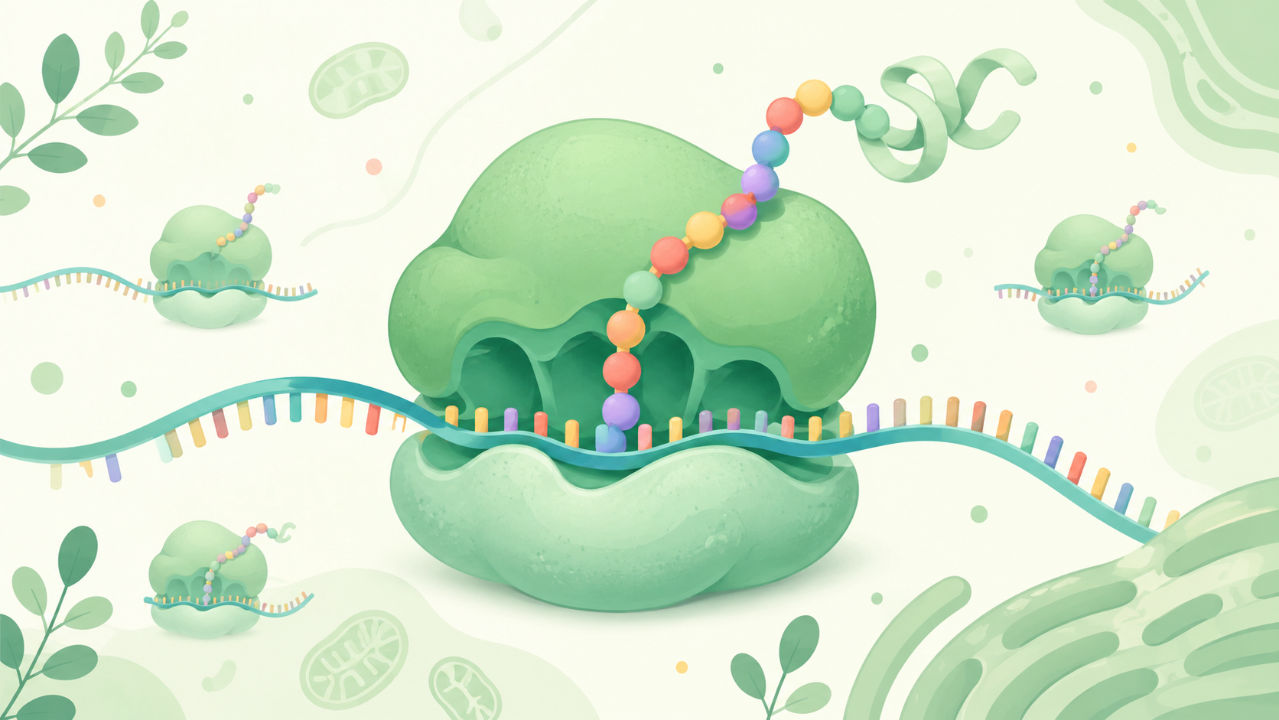
Ribosomes are essential components of all living cells, playing a crucial role in protein synthesis, a fundamental process that enables the growth and maintenance of organisms. This tutorial aims to provide an in-depth understanding of ribosomes, their structure, function, and significance in cellular biology.
Historical Background
The discovery of ribosomes dates back to the early 20th century when scientists first identified cytoplasmic granules within cells that were later identified as ribosomes. Since then, research on ribosomes has significantly advanced our understanding of protein synthesis and cellular metabolism.
Significance of Ribosomes
Understanding the role and function of ribosomes is essential for comprehending various biological processes, such as growth, differentiation, and homeostasis. Furthermore, ribosomes have attracted considerable attention in drug discovery due to their crucial involvement in several pathogenic mechanisms.
Organization of Content
This tutorial will delve into the structure, function, synthesis, and regulation of ribosomes. We will also discuss ribosome biogenesis, modification, and transportation as well as their role in cellular metabolism. In addition, we will examine the differences between prokaryotic and eukaryotic ribosomes and their implications for drug discovery and targeting.
Learning Objectives
By the end of this tutorial, you should be able to:
- Describe the structure of ribosomes, including their subunits and functional domains.
- Explain the function of ribosomes in protein synthesis, from initiation to termination.
- Identify the key components involved in ribosome biogenesis, modification, and transportation.
- Compare and contrast prokaryotic and eukaryotic ribosomes, and discuss their implications for drug discovery.
- Discuss the role of ribosomes in cellular metabolism and homeostasis.
- Evaluate current research advances in the field of ribosome biology and identify future directions for study.
Ribosome Structure
Composition and Subunits
Ribosomes are composed of ribonucleic acid (RNA) and protein, specifically ribosomal RNA (rRNA) and ribosomal proteins. They exist as two subunits: the small subunit (SSU or 30S) and the large subunit (LSU or 50S).
Domains and Functional Sites
Both subunits contain various functional sites involved in protein synthesis, such as the aminoacyl site, peptidyl site, and exit site. Additionally, the LSU contains a decoding site responsible for reading mRNA codons.
Ribosome Function: Protein Synthesis
Initiation
Protein synthesis begins with the initiation phase, where the small ribosomal subunit binds to the 5' cap of the mRNA transcript and the initiator tRNA (fMet-tRNA) is positioned at the A site.
Elongation
The elongation phase involves the addition of amino acids to the growing polypeptide chain through peptide bond formation. This process occurs cyclically as the ribosome moves along the mRNA transcript, reading codons and adding corresponding amino acids according to the genetic code.
Termination
The termination phase signals the completion of protein synthesis. Termination codons (UAA, UAG, or UGA) trigger the release of the completed polypeptide from the ribosome.
Ribosome Biogenesis and Modification
Ribosomes are synthesized in the nucleolus and mature through a series of processing steps known as ribosome biogenesis. This process involves the transcription, processing, and assembly of rRNA, as well as the association with ribosomal proteins. Modifications, such as methylation and pseudouridylation, further refine the function of mature ribosomes.
Ribosome Transportation
In eukaryotes, mature ribosomes are transported from the nucleus to the cytoplasm through nuclear pore complexes. This process ensures that newly synthesized proteins are appropriately localized within cells.
Prokaryotic and Eukaryotic Ribosomes
Although both prokaryotic and eukaryotic ribosomes share a common structure and function, there are notable differences between them. For instance, the LSU of prokaryotic ribosomes contains only one rRNA molecule, whereas that of eukaryotes contains three. Additionally, the number of ribosomal proteins varies between these two types of organisms.
Implications for Drug Discovery
Understanding the differences between prokaryotic and eukaryotic ribosomes can aid in drug discovery efforts by enabling the development of drugs that selectively target one or the other. This strategy has the potential to reduce off-target effects, increase therapeutic efficacy, and minimize toxicity.
Role of Ribosomes in Cellular Metabolism
In addition to protein synthesis, ribosomes have been implicated in various cellular metabolic processes, such as autophagy, lipid biosynthesis, and stress response mechanisms. Furthermore, ribosomes are integral components of the endoplasmic reticulum (ER) stress response pathway, which regulates protein folding and cell survival under conditions of ER stress.
Current Research Advances and Future Directions
Recent research has focused on elucidating the molecular mechanisms underlying ribosome biogenesis, regulation, and function. Additionally, efforts are being made to develop inhibitors of ribosome activity for targeted therapeutic applications. Ongoing research in this field is expected to yield novel insights into protein synthesis and cellular metabolism, paving the way for new treatments for various diseases.