Cellular Biology
course-show.h1-title
Discover the secret mechanisms of cellular communication. By learning about different molecular signals and their receptors, you will explore how cells communicate with each other and coordinate their functions to maintain the health of our bodies. This course will also address the challenges associated with disruptions to the cellular communication system in various diseases such as cancer, infections, and neurodegeneration.
Introduction
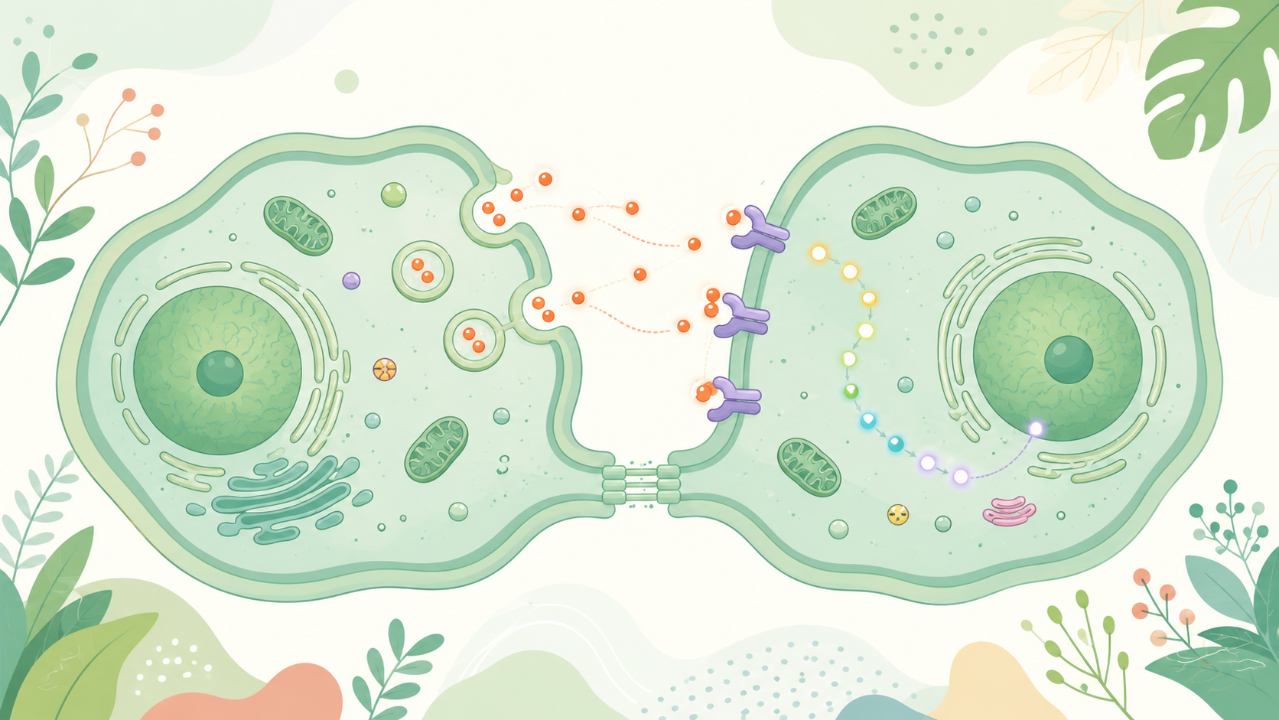
Cellular communication is a fundamental aspect of cell biology, enabling cells to coordinate their activities and interact with one another in multicellular organisms. This process is crucial for the proper functioning of various biological systems, including growth, development, homeostasis, and response to stimuli. This course aims to provide an in-depth exploration of the key mechanisms that facilitate cellular communication, focusing on both intracellular and intercellular signaling pathways.
Overview of Cellular Communication
Cells communicate with each other through various methods, including direct contact, chemical signals, and electrical signals. Intracellular communication occurs within a single cell through mechanisms such as second messenger systems, ion channels, and transcription factors. Intercellular communication takes place between cells through secreted molecules like hormones, neurotransmitters, and growth factors.
Intracellular Communication
Second Messenger Systems
Second messenger systems are crucial for intracellular signaling, as they allow cells to respond to extracellular signals by altering their internal state. These systems involve the activation of specific receptors, which in turn activate enzymes that produce secondary messengers. The most common second messengers include calcium ions (Ca^{2+}), cyclic adenosine monophosphate (cAMP), and diacylglycerol (DAG).
Receptor-Ligand Interaction
Receptors are proteins that bind specific extracellular ligands, such as hormones or neurotransmitters. When a ligand binds to its receptor, it triggers a series of downstream events that ultimately result in changes in the cell's behavior.
Activation of Enzymes
Activated receptors can either activate enzymes directly or recruit them to the vicinity of the receptor complex. The activated enzyme then produces the second messenger, which diffuses throughout the cytoplasm and initiates a cascade of reactions leading to changes in gene expression, ion channel activity, or other cellular processes.
Ion Channels
Ion channels are transmembrane proteins that allow the passage of specific ions across the cell membrane. They play a crucial role in intracellular communication by controlling the electrical properties of cells and participating in various signaling pathways.
Types of Ion Channels
Ion channels can be classified based on their selectivity for different ions, voltage dependence, ligand gating, or subunit composition. Some common types of ion channels include potassium channels, sodium channels, calcium channels, and chloride channels.
Role in Signaling Pathways
Ion channels contribute to various signaling pathways by altering the electrical properties of cells, influencing the activity of other proteins, or modulating gene expression. For example, changes in membrane potential can trigger the release of neurotransmitters or activate intracellular enzymes involved in second messenger systems.
Intercellular Communication
Secreted Molecules
Cells communicate with each other through secreted molecules like hormones, neurotransmitters, and growth factors. These signaling molecules bind to specific receptors on the target cell's surface, leading to changes in gene expression, ion channel activity, or metabolic processes.
Hormones
Hormones are secreted by endocrine cells into the bloodstream, where they travel to distant target tissues and elicit specific responses. Examples of hormones include insulin, thyroid hormone, and cortisol.
Neurotransmitters
Neurotransmitters are signaling molecules that facilitate communication between neurons in the nervous system. They are released from the presynaptic nerve terminal and bind to receptors on the postsynaptic neuron, modulating its electrical activity or inducing changes in gene expression.
Growth Factors
Growth factors are signaling molecules that regulate cell growth, differentiation, and survival. They are secreted by various cells, including immune cells, and can influence the behavior of target cells, such as stem cells or epithelial cells.
Receptor-Mediated Signaling
Receptors for secreted molecules can be classified into two main categories: cell surface receptors and intracellular receptors. Both types of receptors transduce extracellular signals into intracellular responses, which ultimately lead to changes in gene expression, metabolism, or ion channel activity.
Cell Surface Receptors
Cell surface receptors are integral membrane proteins that bind specific ligands and initiate signaling pathways upon activation. Examples of cell surface receptors include G protein-coupled receptors (GPCRs) and tyrosine kinase receptors.
Intracellular Receptors
Intracellular receptors are cytoplasmic proteins that bind specific ligands within the cell and initiate signaling pathways upon activation. Examples of intracellular receptors include nuclear hormone receptors and DNA-binding proteins.
Paracrine, Autocrine, and Endocrine Signaling
Cells can communicate with each other through three main modes of signaling: paracrine, autocrine, and endocrine.
Paracrine Signaling
Paracrine signaling occurs when a cell secretes a signaling molecule that diffuses locally and binds to receptors on neighboring cells. This type of signaling allows for precise control of cell behavior in specific tissues or regions.
Autocrine Signaling
Autocrine signaling occurs when a cell responds to its own secreted signaling molecules. This can provide feedback regulation of cellular processes, allowing cells to fine-tune their responses to changing environmental conditions.
Endocrine Signaling
Endocrine signaling involves the release of signaling molecules into the bloodstream and transport to distant target tissues. This type of communication allows for long-range coordination of cellular activities, particularly in multicellular organisms.
Conclusion
Cellular communication plays a critical role in maintaining proper functioning of cells and multicellular organisms. By understanding the various mechanisms that facilitate intracellular and intercellular signaling, we can gain insights into the underlying processes that control growth, development, homeostasis, and response to stimuli. This knowledge can potentially lead to the development of novel therapies for a wide range of diseases and disorders.