Arthrology, or syndesmology
course-show.h1-title
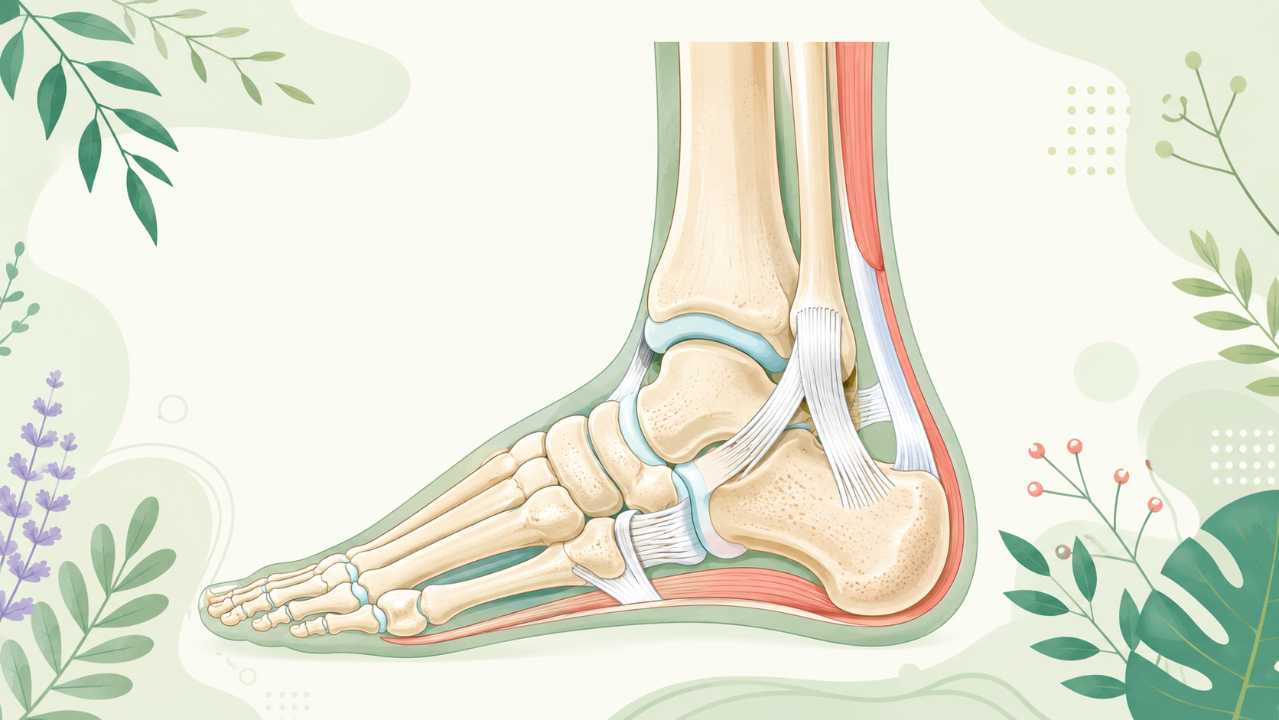
Discover the talonipedal joint in this syndesmology course: the bones, cartilage, and ligaments that enable the articulation of this complex joint. Learn to identify its various anatomical components and analyze their function, as well as their main diseases, such as osteoarthritis or talonipedal fractures.
Introduction
The ankle joint, or talocrural joint, is a complex synovial joint that primarily connects the tibia and fibula of the lower leg with the talus of the foot. This joint allows for multiple degrees of motion including plantar flexion, dorsiflexion, inversion, and eversion, making it crucial for locomotion and maintaining balance during various activities.
Anatomy of the Ankle Joint
The ankle joint is composed of three articulations: the talocrural joint, the subtalar joint, and the inferior tibiofibular joint. Each contributes to the overall functionality of the joint complex.
The Talocrural Joint
This synovial joint allows for movements between the talus, tibia, and fibula bones. Its medial and lateral malleoli provide stability while the articular surfaces enable motion.
Articular Surfaces and Movements
The articular surface of the tibia (talar dome) accommodates the superior and medial aspects of the talus, allowing for movements such as plantar flexion and inversion. The articular surface of the fibula (fibular notch) accommodates the lateral aspect of the talus, facilitating eversion.
The Subtalar Joint
Located inferior to the talocrural joint, the subtalar joint connects the talus with the calcaneus bone. It enables inversion and eversion movements, allowing for fine adjustments during locomotion.
Articular Surfaces and Movements
The articular surfaces of the talus (the sustentaculum tali on the medial side and the facet for the calcaneus on the lateral side) accommodate the corresponding surfaces of the calcaneus, facilitating movements such as inversion, eversion, and slight plantar flexion.
The Inferior Tibiofibular Joint
This fibrous joint connects the inferior aspects of the tibia and fibula. It provides stability to the ankle complex by limiting excessive motion between these two bones.
Ligaments of the Ankle Joint
Ligaments play a vital role in maintaining the integrity and functionality of the ankle joint. They provide support, limit excessive motion, and prevent dislocations.
Medial Ligament Complex
The medial ligament complex consists of three major ligaments: the deltoid ligament, the anterior talofibular ligament, and the calcaneofibular ligament. The deltoid ligament is primarily responsible for resisting inversion forces, while the anterior talofibular and calcaneofibular ligaments resist eversion forces.
Lateral Ligament Complex
The lateral ligament complex comprises the anterior talofibular ligament, the calcaneocuboid joint capsule, and the interosseous ligament. The anterior talofibular ligament is primarily responsible for preventing excessive plantar flexion and inversion.
Common Injuries of the Ankle Joint
Common injuries affecting the ankle joint include sprains, strains, fractures, and dislocations. Understanding these injuries can help in their prevention, diagnosis, and treatment.
Sprains
Sprains are ligament injuries caused by excessive stretching or tearing of the ligaments due to trauma. They typically occur more frequently on the lateral side of the ankle joint.
Strains
Strains refer to injuries affecting the muscles or tendons surrounding the ankle joint, often caused by overstretching or tear during strenuous activities.
Fractures
Fractures of the bones in and around the ankle joint can occur due to trauma. Commonly affected bones include the talus, tibia, and fibula.
Dislocations
Dislocations of the ankle joint are rare but can cause significant instability and pain. They may occur as a result of direct trauma or excessive force on the joint.
Diagnosis and Treatment of Ankle Joint Injuries
The diagnosis and treatment of ankle joint injuries involve various steps, including physical examination, imaging studies (X-ray, MRI), casting or bracing, and in some cases, surgical intervention.
Physical Examination
A thorough physical examination is essential for identifying the nature and extent of the injury. The healthcare provider will assess the affected area for swelling, tenderness, instability, and range of motion.
Imaging Studies
Imaging studies, such as X-rays or MRIs, can help confirm the diagnosis, determine the severity of the injury, and rule out any other potential injuries.
Casting or Bracing
Mild to moderate ankle joint injuries may be treated with casting or bracing to immobilize the joint and allow for healing.
Surgical Intervention
In cases of severe fractures, ligament tears that do not heal with conservative treatment, or dislocations, surgical intervention may be necessary.
Rehabilitation and Prevention
Rehabilitation plays a crucial role in the recovery process following ankle joint injuries. A structured rehabilitation program can help restore strength, mobility, and stability to the affected area.
Prevention strategies for ankle joint injuries include proper warm-up and cool-down exercises, appropriate footwear, and techniques for landing and changing direction safely during sports activities.