Cellular Biology
course-show.h1-title
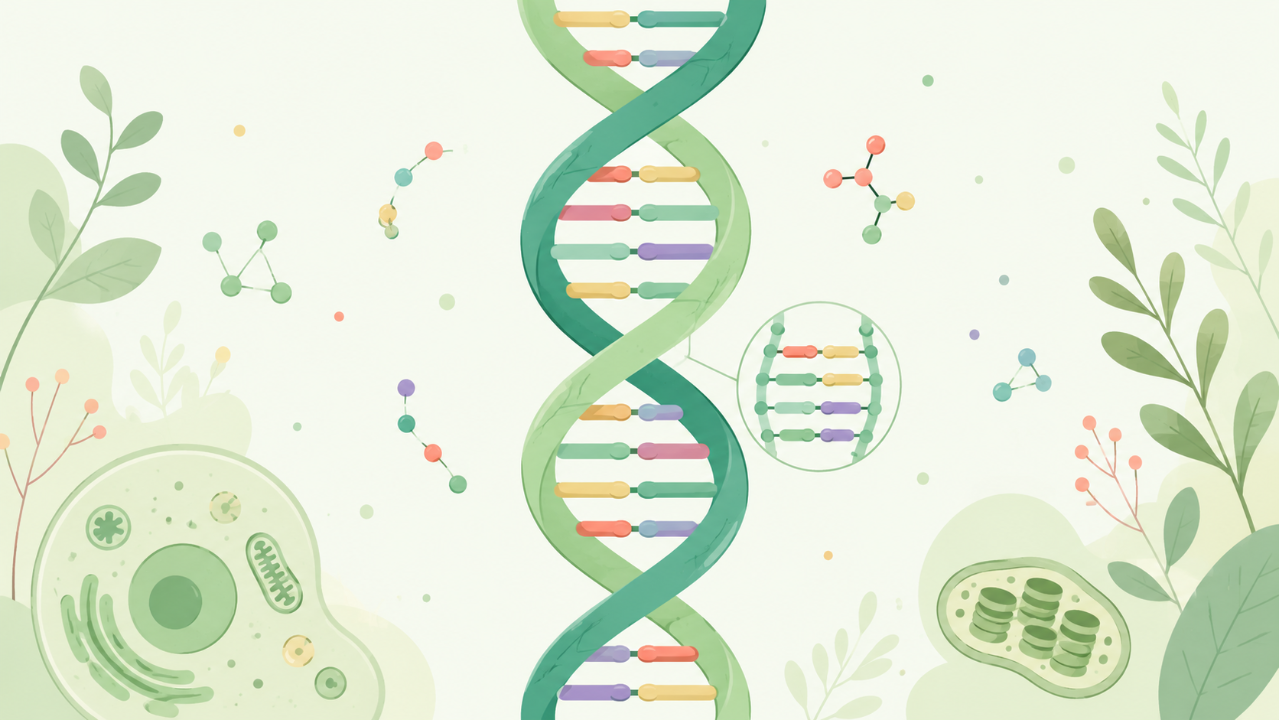
In this course, we will explore the structure of DNA, the main molecule of our living cells. Discover how this nucleic acid enables the transfer and reproduction of genetic information by studying its double helices with complementary base pairs, as well as its specific central and terminal regions.
Introduction
The study of Deoxyribonucleic Acid (DNA) is a fundamental aspect of molecular biology and genetics. This course aims to provide an in-depth analysis of the structure of DNA, which serves as the blueprint for all living organisms. Understanding the structure of DNA will enable students to comprehend various biological processes such as replication, transcription, and translation, as well as genetic inheritance patterns.
Historical Perspective
The discovery of DNA began in 1869 when Friedrich Miescher isolated a substance from white blood cells that he called "nuclein." However, it was not until the 1950s that James Watson and Francis Crick proposed the famous double-helix model of DNA structure. This landmark discovery paved the way for understanding the genetic code and its role in heredity and evolution.
Structure of DNA
Components of DNA
DNA is a long polymeric molecule composed of two strands coiled around each other in a double helix conformation. The fundamental unit of DNA is the nucleotide, which consists of three components: a sugar (deoxyribose), a phosphate group, and a nitrogenous base.
Nitrogenous Bases
There are four different types of nitrogenous bases in DNA: adenine (A), thymine (T), guanine (G), and cytosine (C). Adenine pairs with thymine, while guanine pairs with cytosine through hydrogen bonding.
Double Helix Structure
In the double-helix model, each DNA strand is antiparallel, meaning that they run in opposite directions. The sugar and phosphate groups form the backbone of the molecule, while the nitrogenous bases project inward, forming the rungs of the ladder. This arrangement allows for base pairing between adenine and thymine (A-T) and guanine and cytosine (G-C).
Base Pairing Rules
- Adenine always pairs with thymine, while guanine always pairs with cytosine.
- The purine (adenine and guanine) base is always paired with a pyrimidine (thymine and cytosine) base.
- The hydrogen bonds formed between the nitrogenous bases are primarily hydrogen bonds, with two hydrogen bonds in A-T pairs and three hydrogen bonds in G-C pairs.
DNA Replication
DNA replication is the process by which a double-stranded DNA molecule is copied to produce two identical daughter molecules during cell division. The replication of DNA occurs semi-conservatively, meaning that each new strand retains one original strand as a template.
Mechanisms of Replication
- Initiation: The replication process starts when an enzyme called helicase unwinds the double helix at a specific origin of replication.
- Elongation: After initiation, DNA polymerase synthesizes new nucleotides onto the growing strands, using the original template strand as a guide.
- Termination: The elongation process continues until the replication fork reaches the end of the chromosome or an obstacle is encountered.
Significance of DNA Structure
The structure of DNA has far-reaching implications for various biological processes, including:
- Genetic information storage: The sequence of nucleotides in a DNA molecule serves as the blueprint for all genetic information.
- Replication: The double-helical structure allows for semi-conservative replication during cell division, ensuring that each daughter cell receives an identical copy of the genome.
- Transcription: During transcription, the DNA sequence is read by RNA polymerase to synthesize messenger RNA (mRNA), which carries genetic information from the nucleus to the cytoplasm for protein synthesis.
- Mutation and evolution: Small changes in the DNA sequence can lead to mutations, which may have various effects on an organism's phenotype. Over time, these mutations can accumulate and lead to new species through a process known as evolution.
Conclusion
The structure of DNA plays a pivotal role in understanding various aspects of cellular biology and genetics. By examining the double-helix model and its implications for replication, transcription, mutation, and evolution, students can develop a deeper appreciation for the complexity and intricacy of this essential molecule.