Ecology
course-show.h1-title
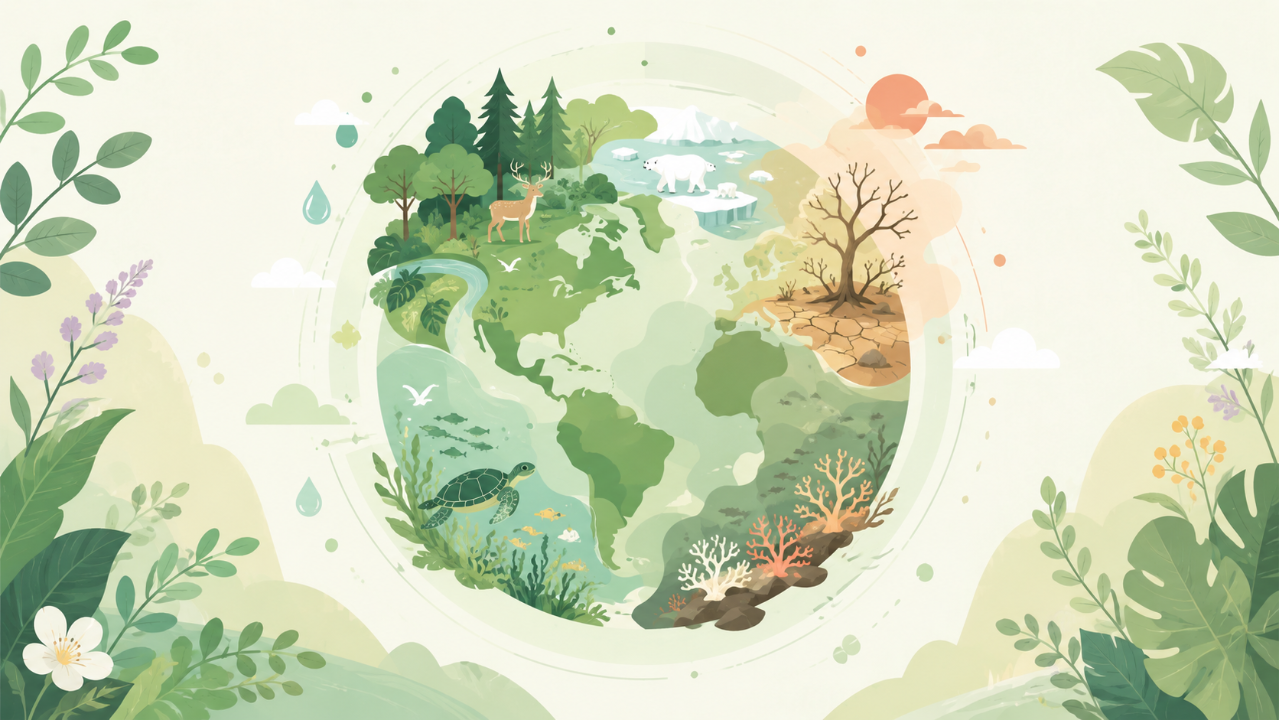
Discover the consequences and challenges of climate change on global ecology. You will explore the dynamics of terrestrial and aquatic ecosystems in a context of global warming, and you will learn to analyze adaptations and resilience strategies for endangered species and fragile ecosystems.
Introduction
The study of climate change and global ecology is a critical area of research in the field of biology, as it concerns the future health and sustainability of our planet's ecosystems. This course aims to provide an in-depth exploration of the key concepts related to this subject, focusing on the interplay between global climate patterns, biodiversity, and the ecological consequences of climate change.
Background
Before delving into the specifics of climate change and its impact on global ecology, it is essential to understand the basics of climatology, ecosystems, and biodiversity. The Earth's climate system comprises various interacting components: atmosphere, hydrosphere, lithosphere, and biosphere. Understanding these systems is crucial for comprehending how human activities, such as burning fossil fuels, deforestation, and agriculture, are altering the Earth's climate.
Climate Change
Causes of Climate Change
The primary driver of recent climate change is the increase in greenhouse gas (GHG) emissions, particularly carbon dioxide (CO2), into the atmosphere. Human activities such as burning fossil fuels for electricity, heat, and transportation are the primary sources of these GHG emissions. The accumulation of these gases in the Earth's atmosphere traps heat from the sun, leading to a rise in global temperatures – a phenomenon known as global warming.
Impacts of Climate Change
The impacts of climate change are far-reaching and affect various aspects of ecosystems and biodiversity. Rising temperatures can lead to shifts in species distributions, alterations in seasonal patterns, and increased vulnerability of certain species to extinction. Changes in precipitation patterns may cause droughts or floods, disrupting the balance within ecosystems and threatening the survival of many species.
Global Ecology
Biodiversity and Ecosystem Services
Biodiversity refers to the variety of life on Earth, encompassing genes, species, and ecosystems. It is crucial for maintaining the stability and functioning of ecosystems, as each organism plays a unique role in its environment. These roles, collectively known as ecosystem services, include processes such as nutrient cycling, pollination, and pest control, which are essential for the health and sustainability of our planet's ecosystems.
Climate Change and Biodiversity Loss
The loss of biodiversity due to climate change is a significant concern for global ecology. As temperatures rise, habitats shift, and precipitation patterns change, many species may not be able to adapt quickly enough to survive in their altered environments. This loss of biodiversity can have far-reaching consequences, as the disappearance of certain species may lead to cascading effects throughout ecosystems, ultimately disrupting the balance and stability of these systems.
Mitigation and Adaptation Strategies
Mitigation Strategies
Mitigation strategies aim to reduce greenhouse gas emissions and slow the pace of climate change. Examples of mitigation strategies include:
- Transitioning from fossil fuels to renewable energy sources, such as wind, solar, and hydroelectric power.
- Implementing policies to promote energy efficiency in buildings, transportation, and industries.
- Reforestation efforts and sustainable forest management practices.
- Carbon capture and storage technologies.
Adaptation Strategies
Adaptation strategies aim to help ecosystems and species adapt to the changes brought about by climate change. Examples of adaptation strategies include:
- Protecting and restoring critical habitats for vulnerable species.
- Developing early warning systems for extreme weather events and climate-related hazards.
- Implementing policies to promote climate-resilient agriculture and infrastructure.
- Enhancing the capacity of ecosystems to adapt through conservation efforts, such as reintroducing native species or promoting habitat connectivity.
Conclusion
Understanding the complex interplay between climate change, global ecology, and biodiversity is essential for addressing one of humanity's most pressing challenges: ensuring a sustainable future for our planet and its inhabitants. This course provides an in-depth exploration of the key concepts related to this subject, highlighting the critical role that biologists play in advancing our understanding of these issues and developing solutions to mitigate and adapt to climate change.