Cellular Biology
The peroxisomes
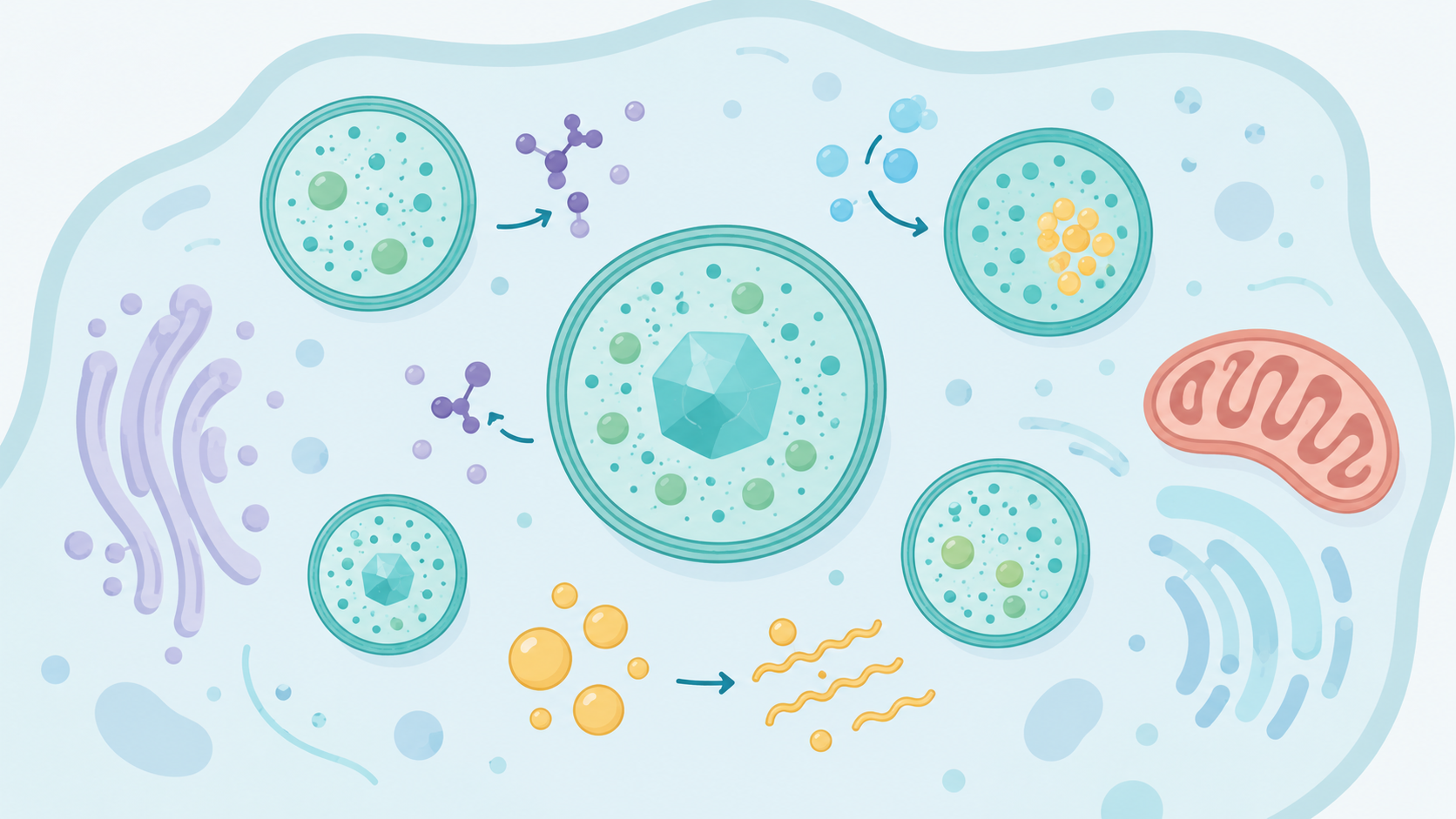
Discover peroxisomes, small cellular organelles that are key to the survival and adaptation of our cells! In this cell biology course, you'll explore their structure...
Osteology
Discover the secrets of the humerus in our osteology workshop! Learn about its detailed anatomy, bone structure, and key functions for forearm movement.

The humerus is one of the long bones in the arm, along with the ulna and radius, which provide structural support and enable mobility in the upper limb. This bone is crucial for performing various functions such as reaching, gripping, and lifting objects. The humerus is unique due to its shape and articulations, allowing a wide range of motion necessary for diverse activities in human daily life.
The humerus has a slightly curved long shaft and three distinct regions: proximal, distal, and shaft (or diaphysis). It is composed of compact bone tissue that provides strength and hardness, and medullary cavity that houses marrow. The humerus consists of two articular surfaces and three distinct bony landmarks: the greater tubercle, lesser tubercle, and the capitulum.
The proximal end of the humerus forms a ball-like surface called the head, which articulates with the glenoid cavity of the scapula (shoulder socket) to enable the wide range of motion in the shoulder joint. The head is approximately spherical and is connected proximally by the neck and tubercles.
The neck is a narrow region that connects the head to the body of the humerus. The neck can be further divided into the anatomical and surgical neck, which have clinical relevance for some procedures.
The greater tubercle is located on the lateral (outer) side of the upper part of the humerus and provides attachment for several muscles that aid in rotating and lifting the arm. The lesser tubercle is a smaller bony prominence found medial to the greater tubercle, providing additional attachment sites for muscles involved in arm movement.
The distal end of the humerus forms two articular surfaces: the trochlea and the capitulum. The trochlea is a C-shaped surface that articulates with the ulna to form the elbow joint, enabling flexion and extension motions. The capitulum is a small rounded surface that articulates with the radial head of the ulna, allowing for rotation of the forearm during supination and pronation movements.
The shaft (or diaphysis) of the humerus runs from the proximal to distal end and provides the primary structural support for the arm. The shaft has an anterior (front) surface, a posterior (back) surface, medial (inner) side, and lateral (outer) side. The shaft is divided by two lines: the intertubercular sulcus (or groove) and the deltoid tuberosity ridge.
The intertubercular sulcus runs longitudinally along the humerus's anterior surface, separating the greater and lesser tubercles from each other. The deltoid tuberosity ridge is a bony prominence found on the posterior surface of the shaft, providing attachment sites for the deltoid muscle that helps in arm abduction.
The humerus plays several essential roles in the upper limb:
Several disorders, injuries, and surgical procedures may affect the humerus. Some examples include:
Do you think you know everything about this course? Don't fall into the traps, train with quizzes! eBiologie has hundreds of questions to help you master this subject.
Discover peroxisomes, small cellular organelles that are key to the survival and adaptation of our cells! In this cell biology course, you'll explore their structure...

Discover how our DNA replicates with each cell division in this molecular biochemistry course: "DNA Replication." You'll learn the key steps in this crucial process...

Learn about evolutionary developmental biology, the field that studies the mechanisms of embryonic development and their evolution at the molecular, cellular, and st...