Cellular Biology
course-show.h1-title
Discover the extraordinary world of cell connections! This course will cover the mechanisms of cell adhesion that are key to intercellular cohesion and communication. Also explore the pathological consequences of the deregulation of these processes, such as cancer and certain neurodegenerative diseases.
Introduction
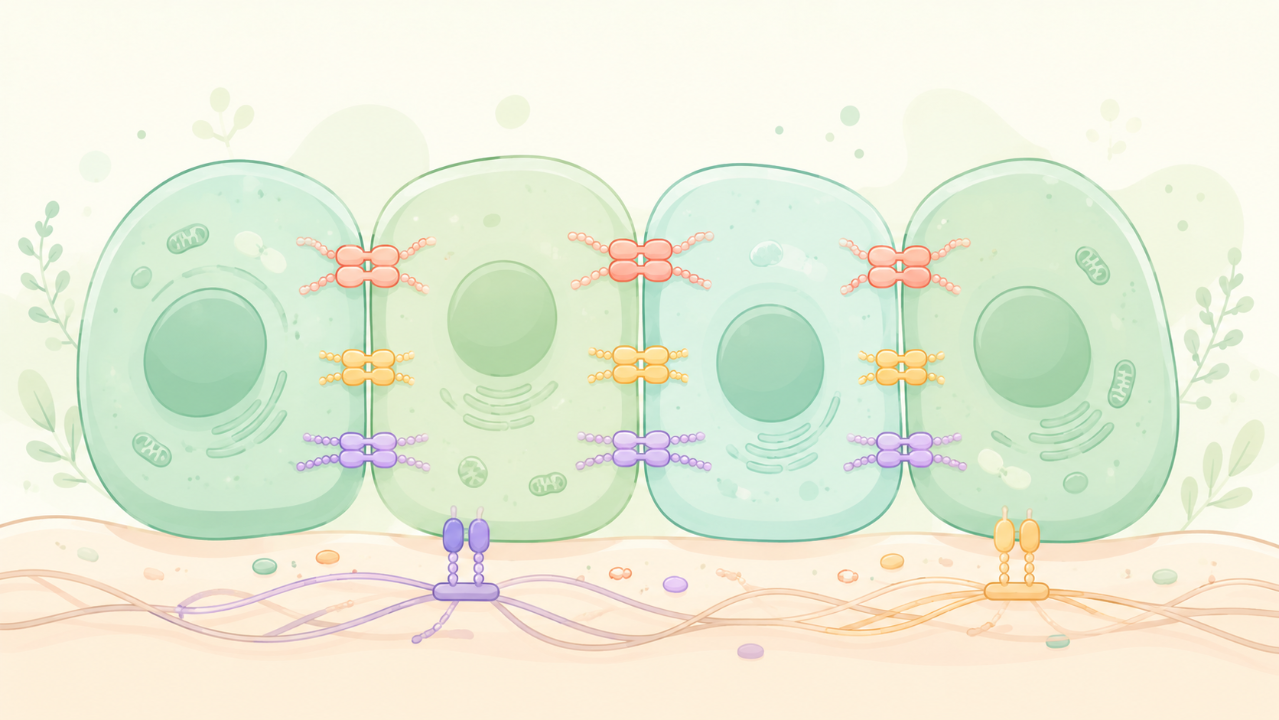
Cell adhesion refers to the physical interaction between cells and their surroundings, including other cells, the extracellular matrix (ECM), and various biomolecules. This fundamental process plays a crucial role in numerous biological processes such as embryogenesis, tissue homeostasis, wound healing, and immune response. In this course, we aim to provide a comprehensive understanding of cell adhesion, focusing on its mechanisms, importance, and implications in different contexts.
The Importance of Cell Adhesion
Regulating Cell Behavior and Function
Cell adhesion influences various aspects of cell behavior and function, including cell shape, migration, proliferation, differentiation, and apoptosis. By regulating these processes, cell adhesion contributes to maintaining tissue organization, preventing uncontrolled growth, and ensuring proper development during embryogenesis.
Role in Developmental Biology
During embryogenesis, cells must migrate, interact, and differentiate into various tissues and organs. Cell adhesion plays a pivotal role in these processes by allowing cells to recognize each other and form specific connections, thereby establishing proper tissue organization. Defects in cell adhesion can lead to developmental abnormalities and congenital disorders.
Tissue Homeostasis and Wound Healing
In adults, cell adhesion is essential for maintaining tissue homeostasis and ensuring the proper function of various organs. During wound healing, cells must migrate, proliferate, and reorganize to repair damaged tissues. The regulation of cell adhesion is crucial for these processes, as it allows cells to adhere appropriately to each other and to the ECM.
Immune Response
Cell adhesion also plays a critical role in immune response. Leukocytes (white blood cells) must migrate from the bloodstream into tissues to fight infections and eliminate foreign invaders. The regulation of cell adhesion is crucial for leukocyte extravasation, phagocytosis, and cytokine production.
Mechanisms of Cell Adhesion
Adhesion Receptors
Adhesion receptors are transmembrane proteins that mediate cell adhesion by interacting with ECM molecules or other cells. These receptors can be classified into two main categories: integrins and cadherins. Integrins, which are heterodimeric transmembrane proteins, bind to various ECM molecules such as fibronectin, collagen, and laminin. Cadherins, on the other hand, are calcium-dependent cell adhesion molecules (CDCAMs) that mediate homotypic adhesion between similar cadherin proteins expressed on adjacent cells.
Adhesion Molecules in the Extracellular Matrix
The ECM is a complex network of proteins, carbohydrates, and other molecules that provides structural support to tissues and regulates cell behavior. Key ECM components involved in cell adhesion include fibronectin, collagen, laminin, and heparan sulfate proteoglycans (HSPGs). These molecules contain specific binding sites for integrins, thus facilitating the attachment of cells to the ECM.
Signaling Pathways Regulating Cell Adhesion
Several signaling pathways are involved in regulating cell adhesion. Integrin-mediated cell adhesion activates various intracellular signaling cascades, including the Ras/Raf/MAPK (mitogen-activated protein kinase), PI3K/Akt, and FAK (focal adhesion kinase) pathways. These pathways influence cell migration, proliferation, differentiation, and survival by regulating gene expression, cytoskeleton dynamics, and cell cycle progression.
Alterations in Cell Adhesion: Pathological Implications
Defects or alterations in cell adhesion can lead to various pathological conditions, including cancer, inflammation, autoimmune diseases, and developmental disorders. In cancer, uncontrolled cell proliferation and migration result from the dysregulation of cell adhesion mechanisms. Similarly, in inflammatory and autoimmune diseases, disruptions in cell adhesion can contribute to tissue damage and chronic inflammation. Understanding the molecular mechanisms underlying cell adhesion is crucial for developing therapeutic strategies aimed at modulating these processes in disease contexts.
Conclusion
Cell adhesion is a fundamental process that plays a crucial role in various biological systems, influencing cell behavior, tissue organization, and development. In this course, we have provided an overview of the mechanisms, importance, and implications of cell adhesion in different contexts. Understanding the intricacies of cell adhesion can provide valuable insights into disease pathogenesis and contribute to the development of novel therapeutic strategies.