Osteology
course-show.h1-title
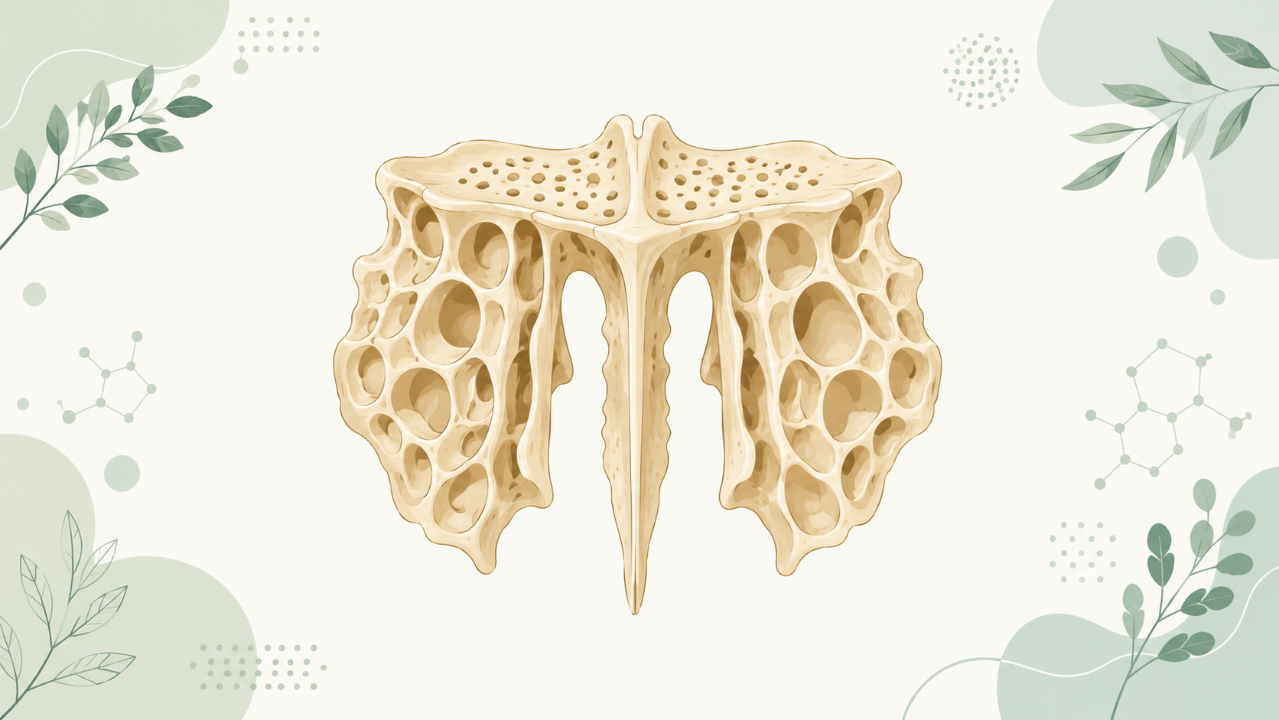
Discover the ethmoid bone, a key element of our skull! This key bone in human anatomy is located in the nasal cavity and helps organize the eye sockets. Let's discover its characteristics, its complex structure, and its essential role in respiratory and visual function!
Introduction
The ethmoid bone is an integral and complex component of the facial skeleton, playing a crucial role in various physiological and protective functions. This tutorial aims to provide a comprehensive understanding of the ethmoid bone, its structure, development, and functions within the human craniofacial complex.
Anatomy and Structure
Definition and Location
The ethmoid bone is one of the 14 bones that constitute the skull. It lies centrally in the nasal cavity and extends laterally towards the orbits of the eyes, forming part of the medial walls of these orbits.
Main Regions and Features
Cribriform Plate
The cribriform plate is a thin, perforated region situated superiorly in the ethmoid bone. It serves as the passageway for olfactory nerve fibers, connecting the nasal cavity with the brain.
Orbital Parts
Laterally, the ethmoid bone contributes to the formation of the medial wall of each orbit. The two regions responsible for this are:
- Lamina papyracea - a thin, flat plate that lies directly behind the eye's outer wall
- Frontal process - a portion of the ethmoid that extends upwards and slightly backwards towards the frontal bone, forming the roof of each orbit
Nasal Parts
The nasal parts of the ethmoid consist of the:
- Perpendicular plate - runs horizontally across the midline, dividing the nasal cavity into left and right chambers
- Horizontal plate - positioned inferiorly to the perpendicular plate, also divides the nasal cavity into left and right chambers
- Two conchae (or turbinals) - curved, bony structures that project laterally from the nasal parts and help filter, humidify, and warm air during inhalation
- Nasal septum - a vertical, midline partition between the two nasal chambers, which is primarily cartilaginous but also includes contributions from the perpendicular plate of the ethmoid
Other Regions
- Sphenoidal wing - a thin, lateral extension that articulates with the sphenoid bone
- Palatine process - extends posteriorly towards the palate and contributes to the formation of the nasal septum
- Lacrimal crest - runs along the inferior edge of the frontal process, providing attachment for the lacrimal ligament
- Olfactory region - the portion of the ethmoid bone that bears olfactory nerve fibers
Development and Growth
Embryologically, the ethmoid bone develops from two sources:
- The nasal processes of the maxilla (upper jaw) - give rise to the perpendicular plate, the conchae, and the nasal septum
- The frontonasal process - contributes to the formation of the cribriform plate, the frontal process, and the lacrimal crest
The ethmoid bone continues to grow and develop throughout fetal life and into adulthood, contributing to the overall growth and shape of the facial skeleton.
Functions
Protective Role
The ethmoid bone helps protect various vital structures within the skull, such as:
- The olfactory bulbs - located superiorly in the cribriform plate, these areas process olfactory (smell) information
- The eyes - lateral portions of the ethmoid bone contribute to the formation of the medial walls of the orbits, thereby offering some protection for the delicate eye structures
- The nasal cavities - the nasal parts of the ethmoid provide structural support and help maintain the shape of the nasal passages
Olfactory Function
The cribriform plate serves as a conduit for olfactory nerve fibers, allowing airborne chemical signals to reach the brain and trigger appropriate responses. This process is essential for survival, as it enables animals to detect food sources, predators, and mates.
Clinical Relevance
Understanding the anatomy and functions of the ethmoid bone is crucial in various medical contexts:
- Trauma - injuries to the ethmoid bone can result in fractures or displacements, potentially affecting vision, breathing, and olfaction
- Surgery - surgical procedures involving the nasal cavity or eyes may involve manipulation of the ethmoid bone, requiring knowledge of its anatomy to minimize complications
- Pathology - various diseases, such as sinusitis, can affect the ethmoid bone and its associated structures, necessitating a thorough understanding of this bone for accurate diagnosis and treatment
Conclusion
The ethmoid bone is a fascinating and complex component of the human skull, playing essential roles in protection, olfaction, and the overall structure of the facial skeleton. By gaining a comprehensive understanding of its anatomy, development, and functions, students can deepen their knowledge of craniofacial anatomy and appreciate the intricate nature of this vital bone.