Cellular Biology
course-show.h1-title
Discover lysosomes, organelles essential for maintaining cellular health. You will learn to understand their role in recycling degraded cellular materials, as well as identify their importance in diseases such as viral meningitis and lysosomopathy.
Introduction
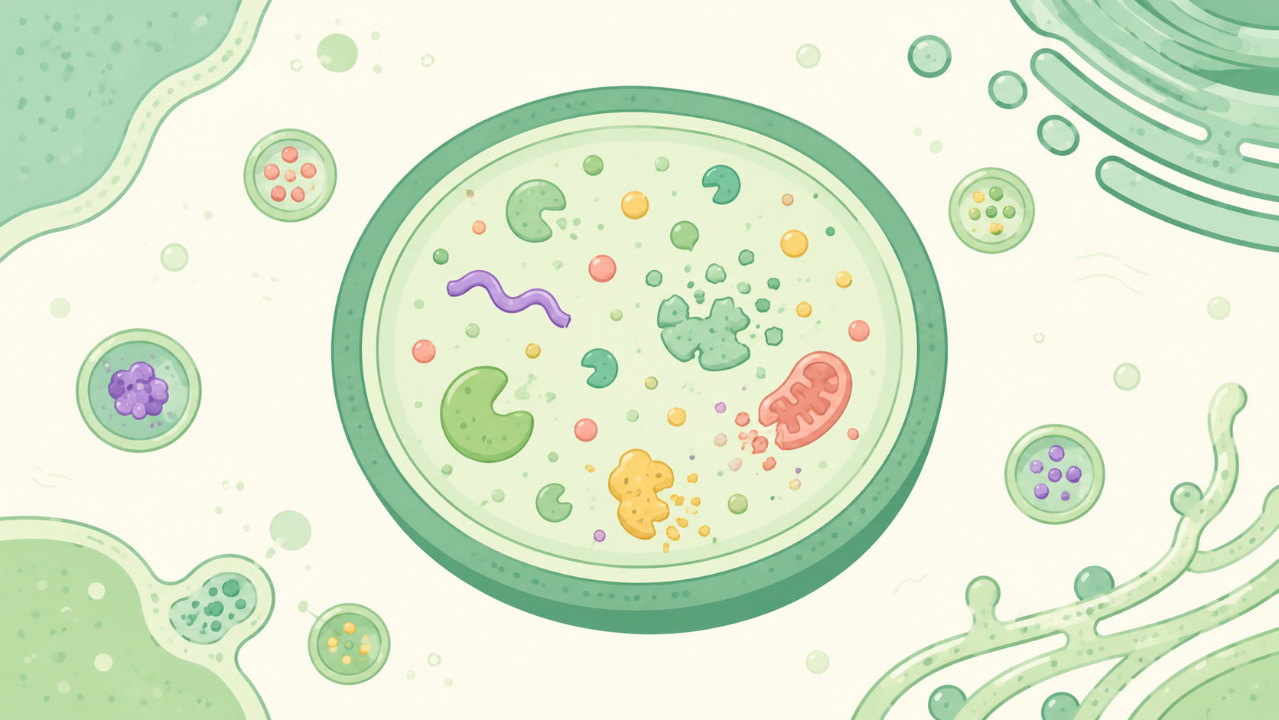
Lysosomes are membrane-bound organelles found within eukaryotic cells, which play crucial roles in intracellular digestion and waste disposal. They were first discovered by de Duve and his colleagues in the 1950s, marking a significant milestone in cell biology research [1]. This article aims to provide an extensive and structured understanding of lysosomes, their structure, function, biosynthesis, and regulation, as well as their implications in diseases such as lysosomal storage disorders.
Definition and Characteristics
Lysosomes are membrane-bound organelles that contain digestive enzymes responsible for degrading cellular waste materials, foreign particles, and invading microorganisms [2]. They are roughly spherical in shape with a diameter of approximately 0.1-0.5 micrometers. Lysosomes have an acidic pH ranging from 4.5 to 5.0, which is essential for the activity of their hydrolytic enzymes [3].
Biogenesis and Components
Lysosomes are formed through a process called autophagy, in which damaged or unnecessary cellular components are engulfed by membranes to form autophagosomes. These autophagosomes fuse with lysosomes to form autolysosomes, where the degradation of the enclosed material occurs [4]. The major components of lysosomes include various hydrolytic enzymes such as proteases, nucleases, and lipases, which are grouped into acid hydrolases, glycosidases, and phosphatases [5].
Functions
Lysosomes perform several essential functions within eukaryotic cells:
- Intracellular Digestion: Lysosomes break down cellular waste materials, worn-out organelles, and invading pathogens using their hydrolytic enzymes [6].
- Antigen Presentation: The degradation products from internalized foreign particles or damaged cellular components are presented to the immune system through Major Histocompatibility Complex (MHC) molecules on the cell surface, thereby triggering an immune response [7].
- Hormone Activation: Lysosomes play a role in activating certain hormones, such as fibroblast growth factor 2 (FGF-2), by cleaving off specific peptides [8].
- Cell Death Regulation: During programmed cell death (apoptosis), lysosomes are involved in the degradation of cellular components and the release of pro-inflammatory signals, contributing to tissue remodeling and wound healing processes [9].
- Autophagy Regulation: Lysosomes serve as a central hub for autophagy regulation by controlling the fusion and fission of autophagosomes, thus maintaining cellular homeostasis [10].
Lysosomal Storage Disorders
Due to their role in intracellular digestion, defects in lysosomal function can lead to various diseases known as lysosomal storage disorders (LSDs). These disorders are characterized by the accumulation of undegraded substrates within lysosomes due to deficient or absent enzyme activity. Examples of LSDs include Gaucher disease, Fabry disease, Pompe disease, and Niemann-Pick disease [11].
Conclusion
Lysosomes are vital organelles that play crucial roles in maintaining cellular homeostasis by carrying out intracellular digestion, antigen presentation, hormone activation, and regulating cell death and autophagy. Understanding the biogenesis, components, functions, and implications of lysosomal dysfunctions can provide valuable insights into various cellular processes and disease mechanisms.