Cellular Biology
The peroxisomes
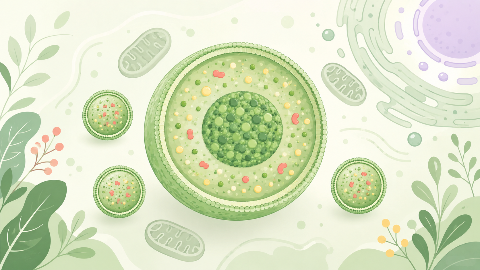
Discover peroxisomes, small cellular organelles that are key to the survival and adaptation of our cells! In this cell biology course, you'll explore their structure...
Evolutionary biology.
Discover the fundamentals of phylogeny and systematics in this evolutionary science course. Learn about analyzing species relationships, classifying living organisms, and modern methods used to establish their relationships.

In the realm of biology, the study of phylogeny and systematics offers an intriguing perspective into the evolutionary history of life on Earth. This course aims to provide a comprehensive understanding of these fascinating subjects, which together constitute the backbone of evolutionary biology. We will delve into the conceptual frameworks that underpin the study of phylogeny and systematics, their interplay, and their significance in our quest for knowledge about the tree of life.
Phylogeny is concerned with the evolutionary history of species and groups of organisms, tracing their descent from a common ancestor through time. It attempts to reconstruct the "tree of life," providing a framework for understanding the diversity of living organisms and how they are related to one another. The study of phylogeny offers insights into patterns of evolution, provides a basis for classification, and sheds light on the processes that shape biodiversity.
Phylogenetic analysis involves comparing the characteristics (morphological, molecular, or behavioral) of organisms to infer their evolutionary relationships. Various methods are employed for this purpose, including:
Systematics refers to the science of classification, which aims to group organisms based on shared characteristics and their evolutionary relationships. A systematic understanding of life is essential for understanding biodiversity, predicting how species will respond to environmental change, and guiding conservation efforts.
The modern classification system is rooted in the work of Carolus Linnaeus, who developed a binomial nomenclature for naming organisms based on their genus and species. This system has undergone numerous revisions and refinements since its inception, reflecting advances in our understanding of the relationships among living organisms.
Although phylogeny and systematics are closely related, they differ in their primary focus and purpose. Phylogeny seeks to reconstruct the evolutionary history of species and their relationships, while systematics aims to classify organisms based on shared characteristics and evolutionary relationships. Systematics is often more concerned with practical applications such as identification, conservation, and taxonomic revision, whereas phylogeny offers insights into broader patterns of evolution and biodiversity.
هل تعتقد أنك تعرف كل شيء عن هذه الدورة؟ لا تقع في الفخاخ، تدرب مع الأسئلة المتعددة الأسئلة! eBiologie لديه مئات الأسئلة لمساعدتك في إتقان هذا الموضوع.
Discover peroxisomes, small cellular organelles that are key to the survival and adaptation of our cells! In this cell biology course, you'll explore their structure...
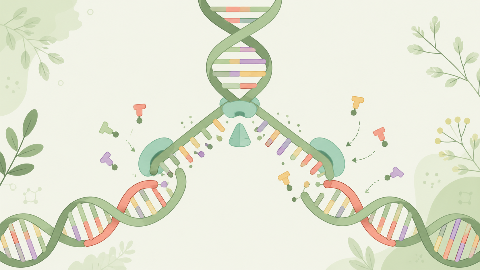
Discover how our DNA replicates with each cell division in this molecular biochemistry course: "DNA Replication." You'll learn the key steps in this crucial process...
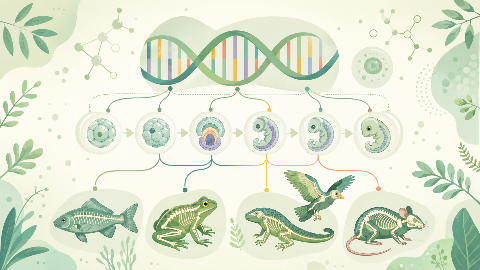
Learn about evolutionary developmental biology, the field that studies the mechanisms of embryonic development and their evolution at the molecular, cellular, and st...